How the Walking Stick Became a Modern Mobility Aid
Learn how walking sticks moved between practical tool and visible accessory, and how that history helps explain the purpose of modern mobility aids.
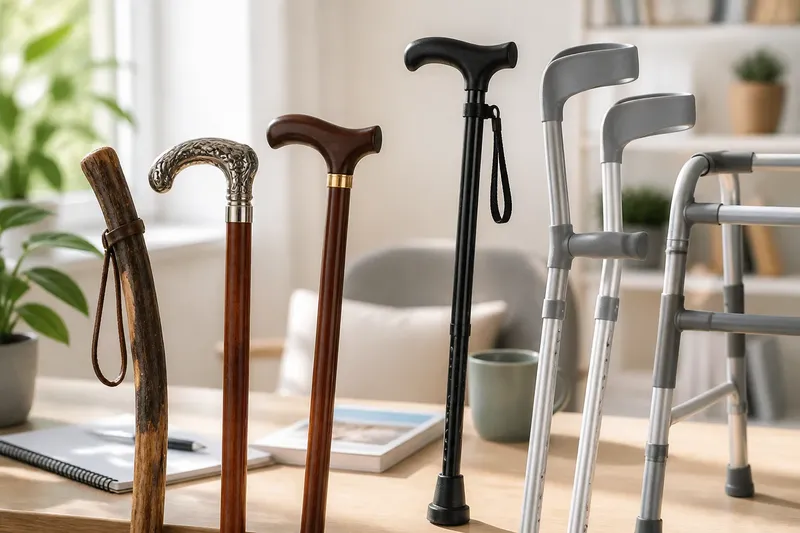
The common mistake in telling the walking stick’s history is to treat it as a support tool from the beginning. In accounts of walking sticks and canes, their uses vary by place, period, and owner: a stick might help on a rough path, complete formal dress, or do both. That distinction matters because a modern mobility aid is designed around support needs, not simply inherited from an old accessory.
Why did people carry walking sticks?
A plain branch or staff could offer a traveler another point of contact on uneven ground. In other settings, a finished cane was also part of public dress. Its material, handle, and decoration could signal taste or social position, even when its carrier did not need it for every step.
These functions could overlap. A cane could be useful and expressive, much as a coat can protect its wearer while also conveying a personal style. But the meaning of a particular stick depended on its context; a polished cane on a town street and a sturdy staff on an outdoor path should not be treated as evidence of one universal custom.
What changed when support became the main design concern?
When a stick was used deliberately to help with walking, practical details mattered: whether the handle could be held securely, whether the height suited its user, and whether the tip made appropriate contact with the ground. These are design considerations, not proof of a single historical turning point. The timing and details of that shift differ across regions and types of walking aid.
A decorative cane or improvised stick is not automatically suitable for mobility support. The shaft, grip, tip, and fit all affect how an aid feels in use. Someone with pain, balance concerns, or a changing recovery need should ask a physical therapist, occupational therapist, or other qualified clinician about suitable support.
Say a person, in an invented situation, feels unsteady on the route from home to a neighborhood shop after an illness. They describe the route and their difficulty to a physical therapist, who assesses their movement and discusses whether a cane or another aid fits. The expected observable result is a clearer, professionally guided choice about what to try, rather than an assumption that one stick will solve every walking difficulty.
How did specialized designs differ?
Some walking staffs were made for outdoor use, while other canes were shaped to accompany formal clothing. Features such as a wrist strap, shaped grip, or particular tip reflect different intended uses. Without a specific place and period, it is safer to describe these as design options than to claim a universal sequence in which one type replaced another.
Modern mobility aids include canes, crutches, and walking frames. They are not interchangeable versions of a walking stick; each has a different design and may suit different needs. A qualified clinician can help with personal health questions, while a supplier can explain product features. Follow the maker’s directions for use.
Why does appearance still matter?
A mobility aid is visible, so its appearance can affect whether a person feels comfortable carrying it. Color, handle shape, and finish can express personal taste. Those choices are meaningful, but they do not replace a suitable fit or a design intended for the user’s support needs.
This is one way the walking stick’s older mix of practical use and public meaning remains relevant. A person may care about both how an aid works and how it looks. Treating appearance as a personal preference, rather than as evidence of status or need, keeps the focus on the individual.
What should you check before choosing a walking aid?
- Check whether the item is designed for mobility support; if it is decorative or improvised, do not rely on it as an aid and ask a qualified professional about suitable options.
- Check whether the height and grip can be assessed for the intended user; if the fit is uncertain, seek professional guidance rather than choosing by appearance alone.
- Check the maker’s instructions for the shaft, joints, and tip; if any part appears damaged or does not function as directed, stop using the item and ask the supplier or maker about next steps.
- Check whether the intended surface matches the aid’s specified use; if it does not, ask a qualified professional or supplier about an appropriate alternative.
- Check whether a folding model locks as its instructions describe; if it does not, do not rely on it until the maker or supplier has addressed the problem.
- Check whether carrying and storing the aid is practical for the person; if it is not, discuss a different form or arrangement with a clinician or knowledgeable supplier.
What do people ask about walking sticks and canes?
Is a walking stick the same as a cane?
The terms overlap in everyday speech, and usage varies by region and product. Some people use “walking stick” for a general or outdoor staff and “cane” for a mobility aid, but the name alone does not establish how an item is designed to be used.
Can any stick provide reliable support?
No. A decorative or improvised stick may not be designed to bear the kinds of forces involved in mobility support. Check the product’s intended use and seek professional guidance if you need an aid for balance, pain, or recovery.
Is a folding cane or a fixed cane a better choice?
Neither form is best for everyone. A folding model may be easier to store, while someone else may prefer a fixed design; assess fit and intended use with a qualified professional when support needs are involved.
Who can help choose a mobility aid?
A physical therapist, occupational therapist, or other qualified clinician can assess movement and discuss suitable options. A knowledgeable supplier can explain product features, but health concerns call for professional advice.
What does the walking stick’s history clarify?
The walking stick’s history is not a simple progression from accessory to improved device. Its practical and expressive roles varied with context, and present-day mobility aids have distinct designs and purposes. That is why a walking stick’s past can offer perspective without serving as a substitute for professional advice about a person’s needs.
For a modern walking aid, begin with the support need and the product’s intended use, then consider fit and appearance with appropriate guidance. The phrase “walking stick” covers objects with different purposes; checking what a particular item is designed to do is a more useful starting point than judging it by name or style.