Backpack or Pannier for a Routine Errand?
Choose a backpack or pannier for a routine errand by matching access, bicycle balance and arrival needs to the shopping you actually carry.
The common mistake with a backpack or pannier for a routine errand is choosing by habit, then discovering the load shifts, the bag is awkward to reach, or it is inconvenient to carry inside. The better choice depends on what you are bringing home, how often you need the items, and what you must have with you after you park.
Why does the load feel awkward on the ride?
A backpack puts weight on your body. That can feel straightforward with a small, compact load, but the weight moves as you pedal, stand, or turn your shoulders. A pannier carries the load on the bicycle, so your back stays free; however, a poorly balanced or loosely packed bag can make the bicycle feel different, especially at low speed.
Start by noticing what kind of awkwardness you feel. If a backpack presses on your shoulders or makes your back warm, try moving the heavier items to a pannier. If the bicycle feels lopsided, check whether one pannier holds most of the load and whether the bag is securely attached. A single pannier can work well for a modest load, but bulky or heavy items may feel less settled off-center.
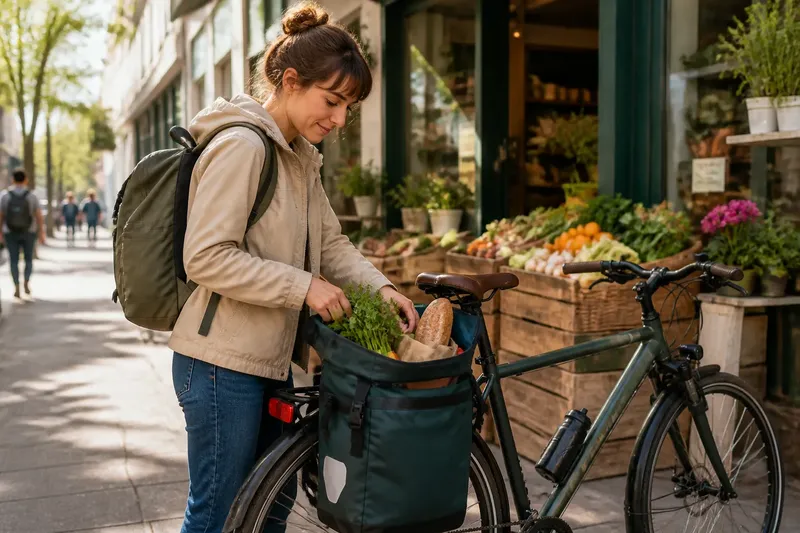
For a pair of panniers, divide the load rather than filling one completely. Keep dense items low and close to the bicycle, and prevent loose groceries from rolling around. A folded tote or small reusable produce bags can help separate items. Avoid packing anything so it can move into the wheel or interfere with the pedals.
Why are the groceries hard to reach?
A backpack is easy to take off, but reaching a particular item means stopping and removing it. That can be irritating if you need a transit card, keys, a phone, or a rain layer during the ride. A pannier can be easier to open while the bicycle is parked, though some designs have clips or flaps that take more attention than a simple zipper.
Give frequently needed items a separate place. A small handlebar pouch or an outer pocket can hold keys and a card, while the main bag carries the shopping. Keep fragile or spill-prone goods away from items that might press against them. For example, a loaf of bread is better placed above heavier groceries than beneath a jar.
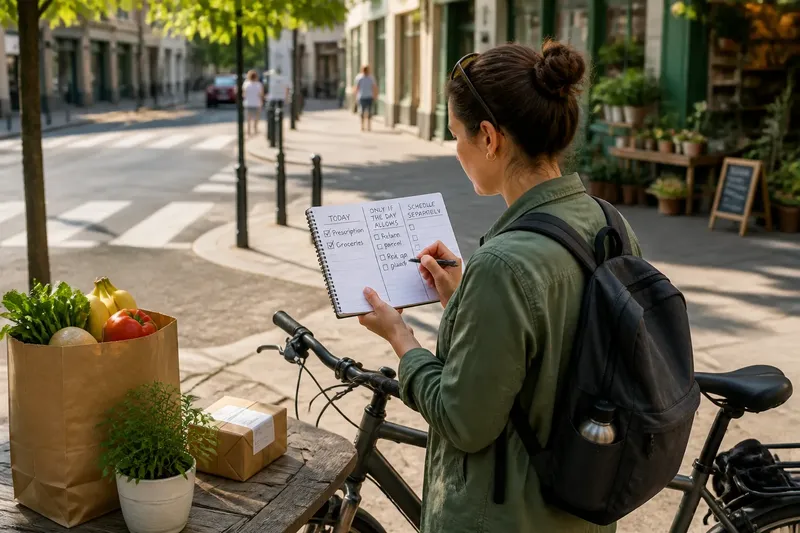
Think about access at the moments that matter, not just while riding. If you will lock the bicycle, enter a shop, and retrieve a list or wallet, choose a pocket you can use without unpacking the whole load. If you do not need to reach anything until you arrive home, the simpler arrangement may be a closed bag with fewer separate compartments.
What becomes inconvenient after parking?
A backpack goes with you immediately. That is useful if the errand ends at a workplace, library, or another stop where you need your belongings. The tradeoff is that groceries and personal items share space on your back. A pannier can leave you carrying only what you need inside, but a bag that is awkward to detach or carry may slow the transition.
Check how the pannier attaches to its rack. Some bags have a shoulder strap or carrying handles; others are designed mainly to stay on the bicycle. Consider whether you will need to carry the bag through a lobby, up stairs, or around a store. If the bag will be brought indoors, detachable hardware and a stable handle can matter as much as its capacity.
Say you are riding to a neighborhood market, buying a few groceries, and then continuing to a class. If the groceries fit in a pannier with a carry strap, you can bring them inside while keeping your class materials in a small backpack. If you only own a backpack, separate food from notebooks with a reusable bag and leave delicate items out of the compressed bottom. The useful choice is the one that handles both the ride and the next doorway.
What should you do when the bag rubs or catches?
When a pannier touches a heel, rattles, or swings toward the wheel, stop using that setup until the bag is secure and clear of moving parts. The cause may be an incompatible bag and rack, a loose attachment, or a load that has shifted. Check the bag and rack instructions, and ask a qualified bicycle mechanic if the mounting or clearance is uncertain.
With a backpack, rubbing often comes from straps or a loose load. Shorten dangling straps and tighten the fit so the bag does not sway. Do not cinch it so tightly that movement or breathing feels restricted. If the load is bulky enough to block your view over your shoulder or make it hard to turn, use a different carrying arrangement.
For any setup, follow the bicycle, rack, and bag maker’s instructions, along with local rules where they apply. Keep the load clear of lights and reflectors, and make sure you can steer and stop comfortably before setting off.
Which bag fits your usual errand?
Use the routine itself to make the decision. A backpack is often convenient when the load is light, you need to carry it through several indoor stops, or your bicycle has no suitable rack. A pannier is often more comfortable for a larger shopping load or when you want your back free, provided the bag fits the rack and is easy to take along when needed.
- Choose a backpack when the load is compact and you need your belongings with you after parking.
- Choose a pannier when the shopping is bulky enough to make a backpack uncomfortable and your bicycle has a compatible rack.
- Split the load when you need work or personal items as well as groceries; keep essentials accessible and food contained separately.
- Reconsider the setup if the bag shifts, catches, blocks your view, or makes the bicycle feel difficult to control.
Before leaving, check that the bag closes, fragile items are protected, and anything you need after parking is easy to remove. For a routine errand, the best backpack or pannier choice is not a permanent rule. It is the arrangement that carries this load comfortably, stays clear of the bicycle, and makes arrival simple.